

Amsterdam, 7 July 2026 – The long-standing trend of extreme overbidding is disappearing from an increasing number of Dutch municipalities. The number of municipalities where extreme overbidding still occurs has fallen from eleven to four in just one year, according to figures from real estate data company Matrixian. The rise in sales prices is also continuing to slow, while selling agents appear to be adapting their pricing strategies to the changing housing market.
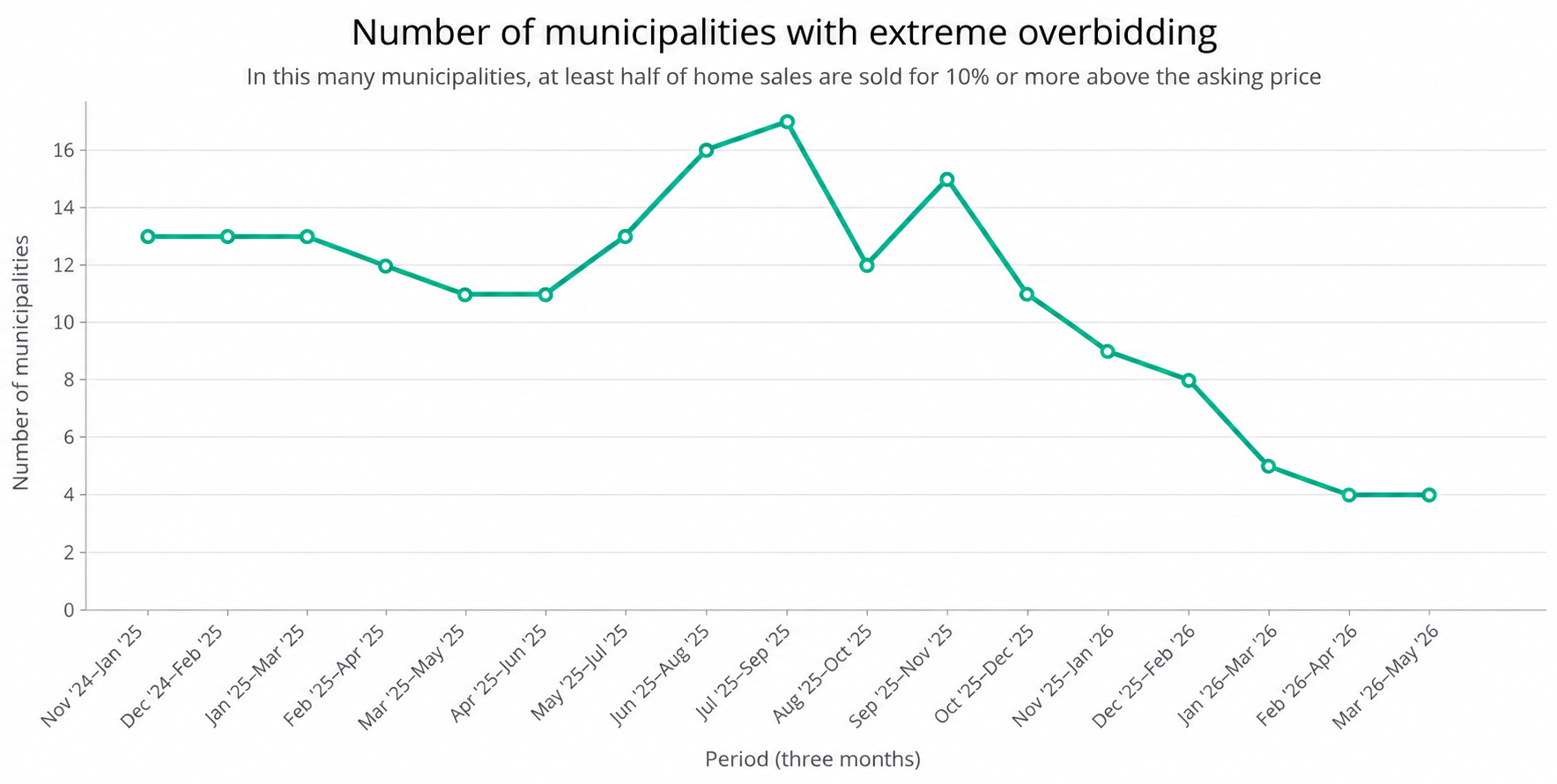
According to Matrixian, extreme overbidding occurs when, in at least half of all home sales, buyers pay more than 10% above the asking price. This is currently the case in only four municipalities: Utrecht, Nieuwegein, IJsselstein and Groningen. During the same period last year, this figure stood at eleven municipalities, and between July and September 2025 it was as high as seventeen.
Source: Matrixian
Overbidding remains the norm, but is becoming less extreme
This does not mean that buying a home has suddenly become easy. In most parts of the Netherlands, homes are still being sold above the asking price. In the majority of municipalities, the final sales price is currently between 1% and 5% above the asking price.
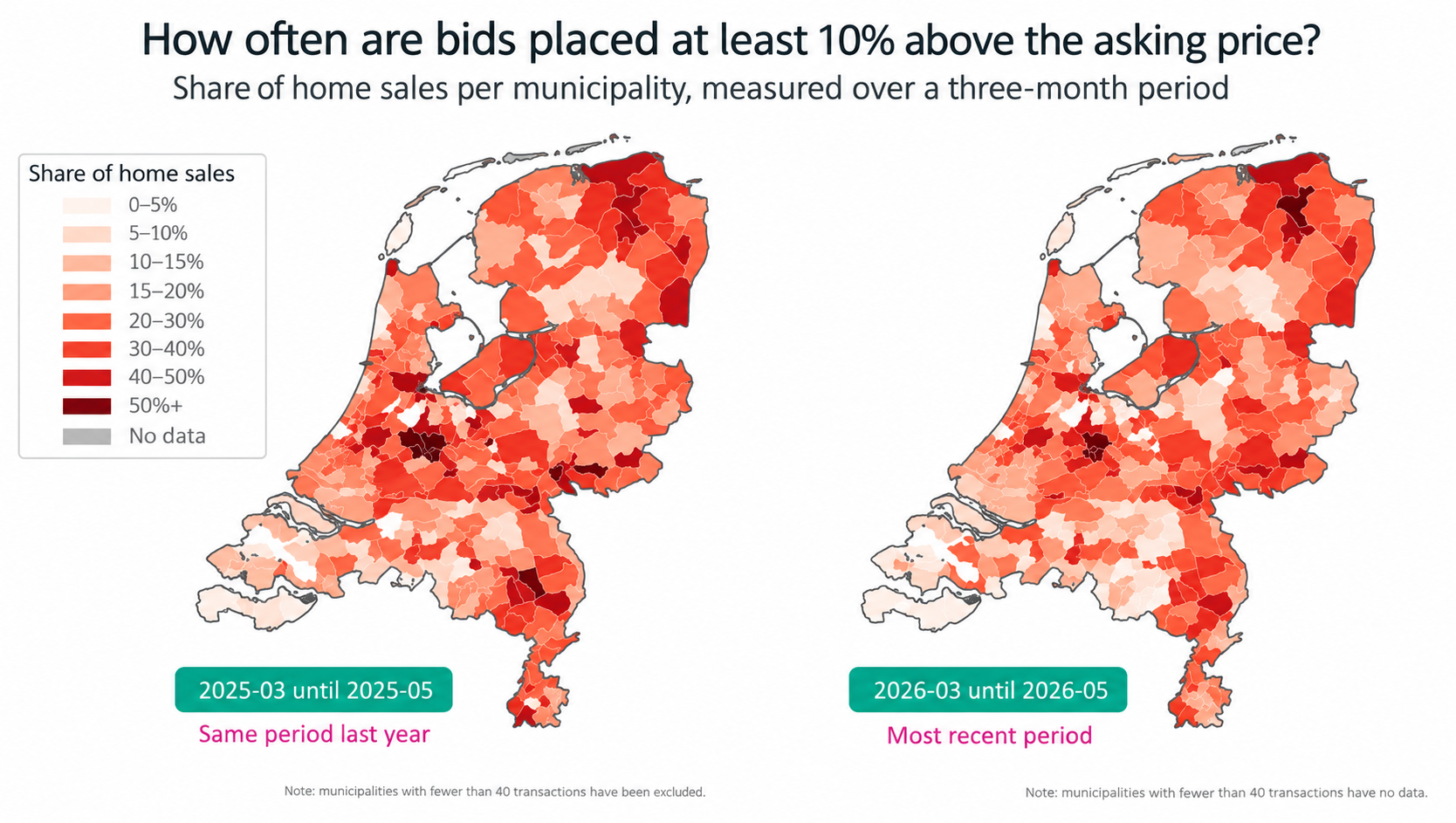
A comparison between the most recent period (March through May 2026) and the same period a year earlier shows that the highest levels of overbidding are now concentrated in a smaller number of regions, particularly around Utrecht and Groningen. In many other parts of the Netherlands, pressure on the housing market has noticeably eased.
Source: Matrixian
Sales prices are still rising, but at a slower pace
The decline in extreme overbidding is consistent with a broader development in the housing market. Matrixian’s analysis shows that the rise in sales prices is beginning to level off.
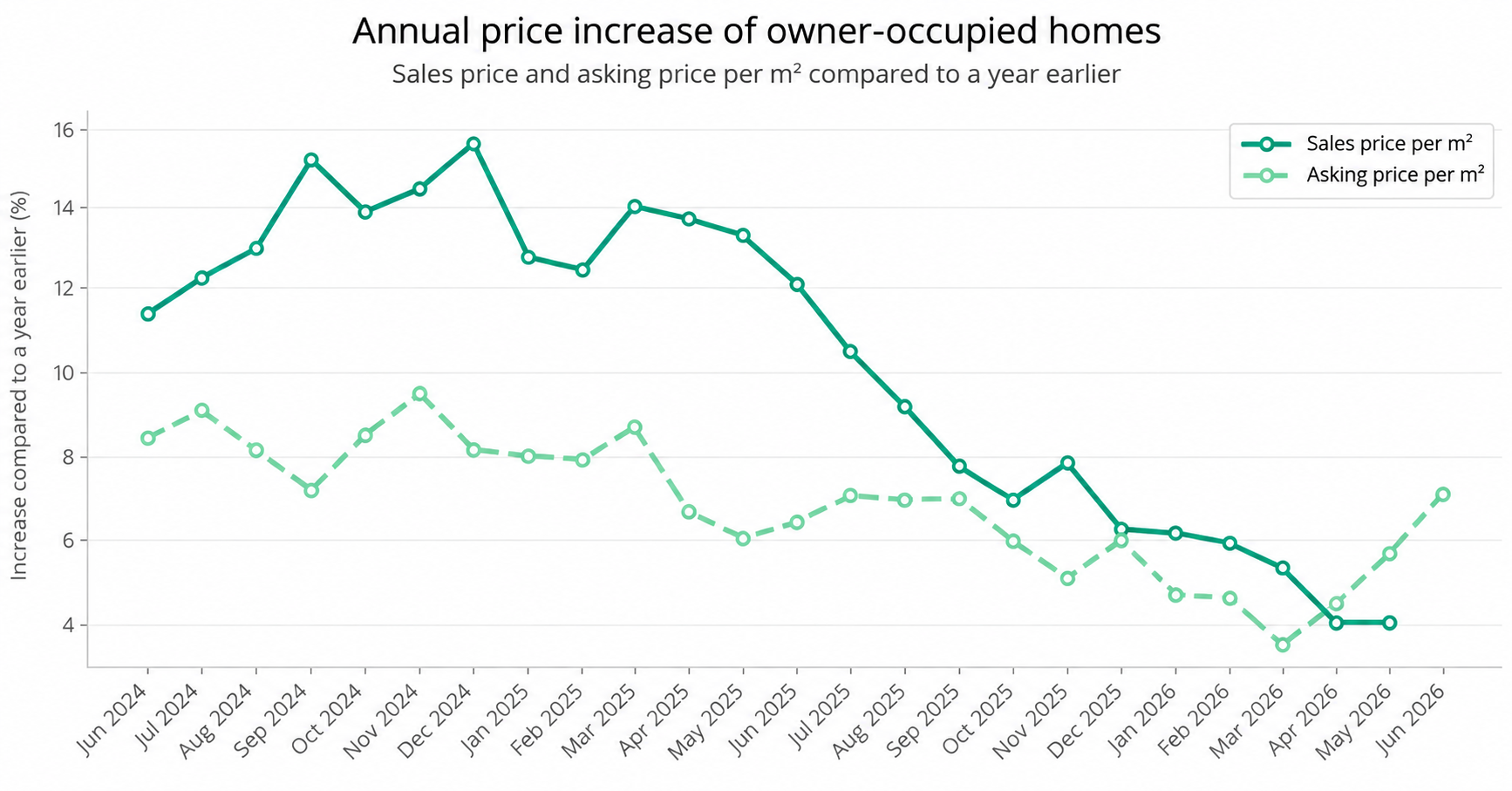
While home prices frequently increased by 10% to 15% in 2024 and early 2025, the annual price increase has now fallen to 4%. Prices are therefore still rising, but at a considerably slower pace.
Source: Matrixian
Real estate agents are adjusting their strategies
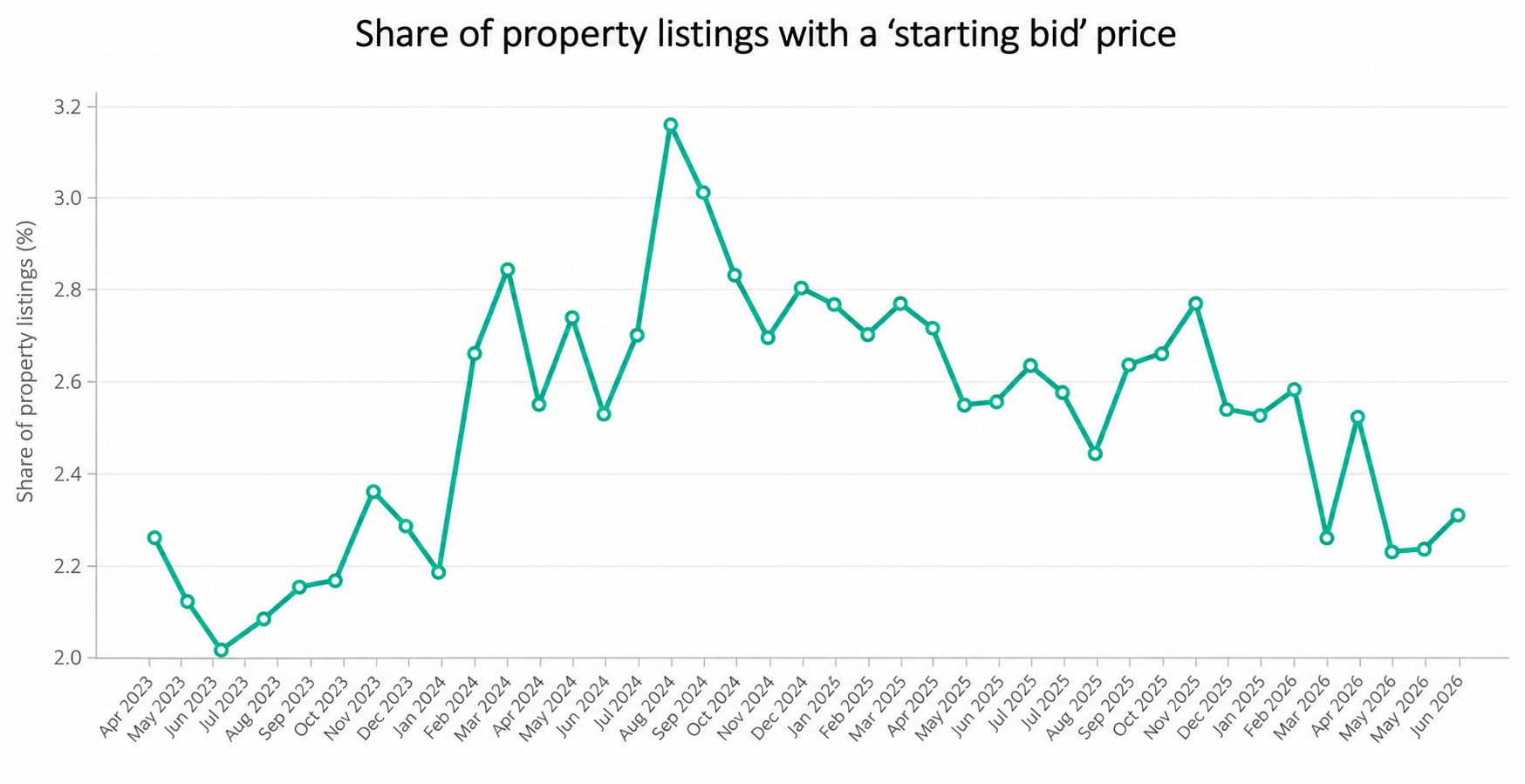
Matrixian is also seeing signs of a changing market in property listings. On housing platforms such as Funda, listings are increasingly less likely to explicitly state that a property is being offered with an ‘offers from’ price.
“Buyers, particularly in the starter and mid-market segments, are often aware that an asking price on Funda effectively already serves as a kind of ‘offers from’ price. As a result, this is only explicitly stated in a small proportion of listings. What stands out is that this proportion has continued to decline in recent months,” says Erno Alberts, real estate data specialist at Matrixian.
“In an overheated market, real estate agents often deliberately list a property at a more competitive price to attract as many bids as possible. Now that overbidding is becoming less extreme, we are seeing agents increasingly use a realistic asking price from the outset. As a result, an ‘offers from’ strategy is becoming less advantageous.”
Developments in asking prices also point in this direction. For the first time in more than two years, asking prices are rising faster than final sales prices. This increase is particularly evident in areas where overbidding is already less prevalent. This may indicate that properties are less frequently priced deliberately low in order to trigger a bidding war.
Source: Matrixian
Housing market moving towards a new balance
Although the housing market remains tight, several developments are pointing in the same direction. Extreme overbidding is occurring in fewer and fewer municipalities, sales price growth is slowing, and the strategies used by selling agents also appear to be changing.
According to Matrixian, these developments indicate that the housing market is gradually shifting away from an exceptionally overheated market towards a situation in which supply and demand are more balanced.
Methodology note: This analysis uses median values. The median is less affected by outliers than the mean.