
Amsterdam, 24 July 2025 – The Dutch housing market continues its upward trend. House prices have risen for the eighth consecutive quarter, overbidding continues to increase, and regional differences are becoming less pronounced. Overbidding has now become the norm across the Netherlands, with the exception of a few peripheral areas. This is according to Matrixian’s latest quarterly figures.
House prices rise for the eighth consecutive quarter
In the second quarter of 2025, the median sales price of a home was €431,000, marking another increase compared with the previous quarter. House prices have now been rising since the second quarter of 2023, representing eight consecutive quarters of growth.
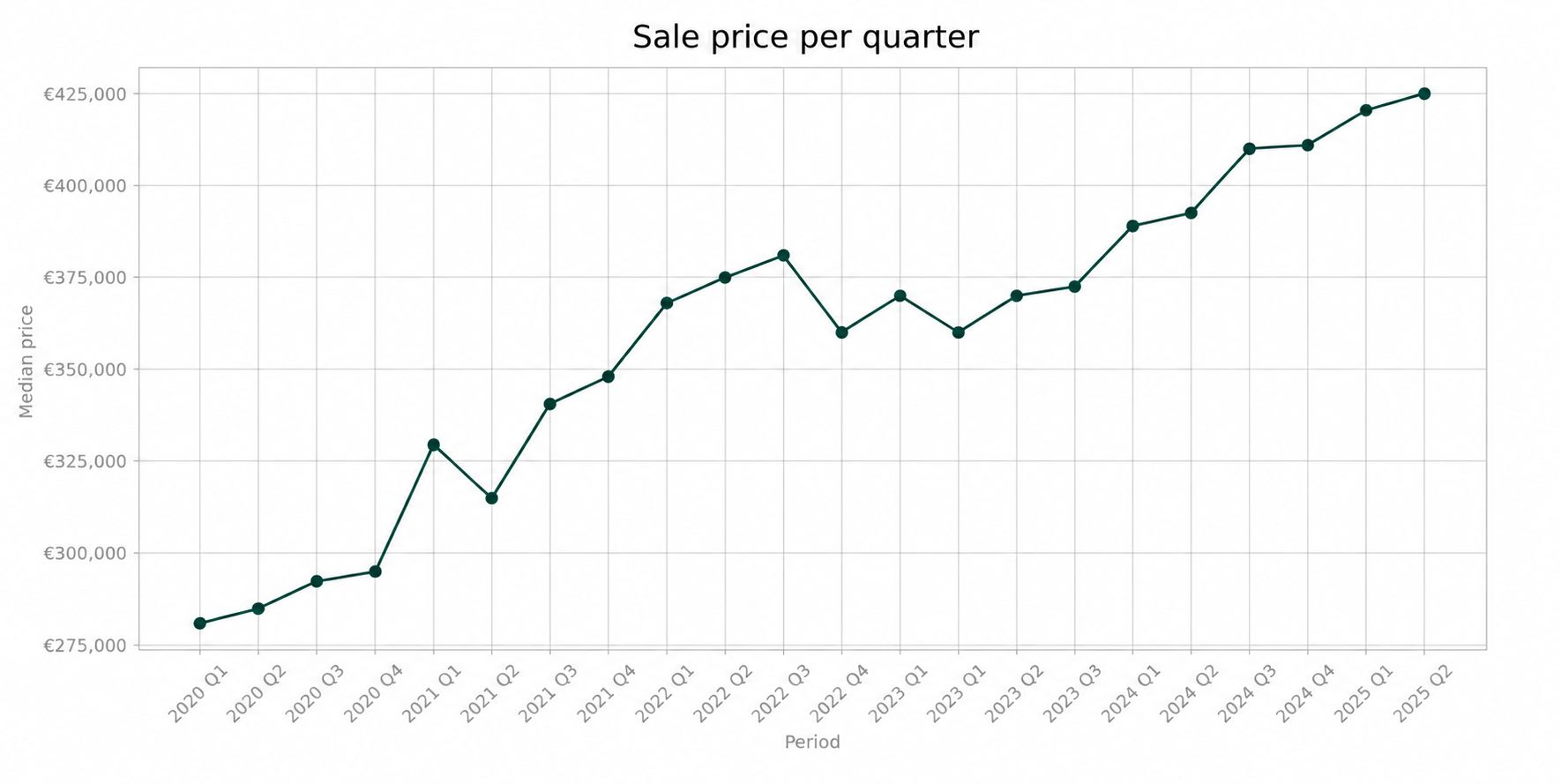
This sustained upward trend is remarkable. Since 1995, there have only been two previous periods in which prices increased continuously for this long:
- From Q1 2017 to Q1 2019, prices rose for nine consecutive quarters.
- Between 1995 and 2002, house prices recorded an exceptional run of 30 consecutive quarters of growth.
Overbidding continues to increase, but remains below the 2021 peak
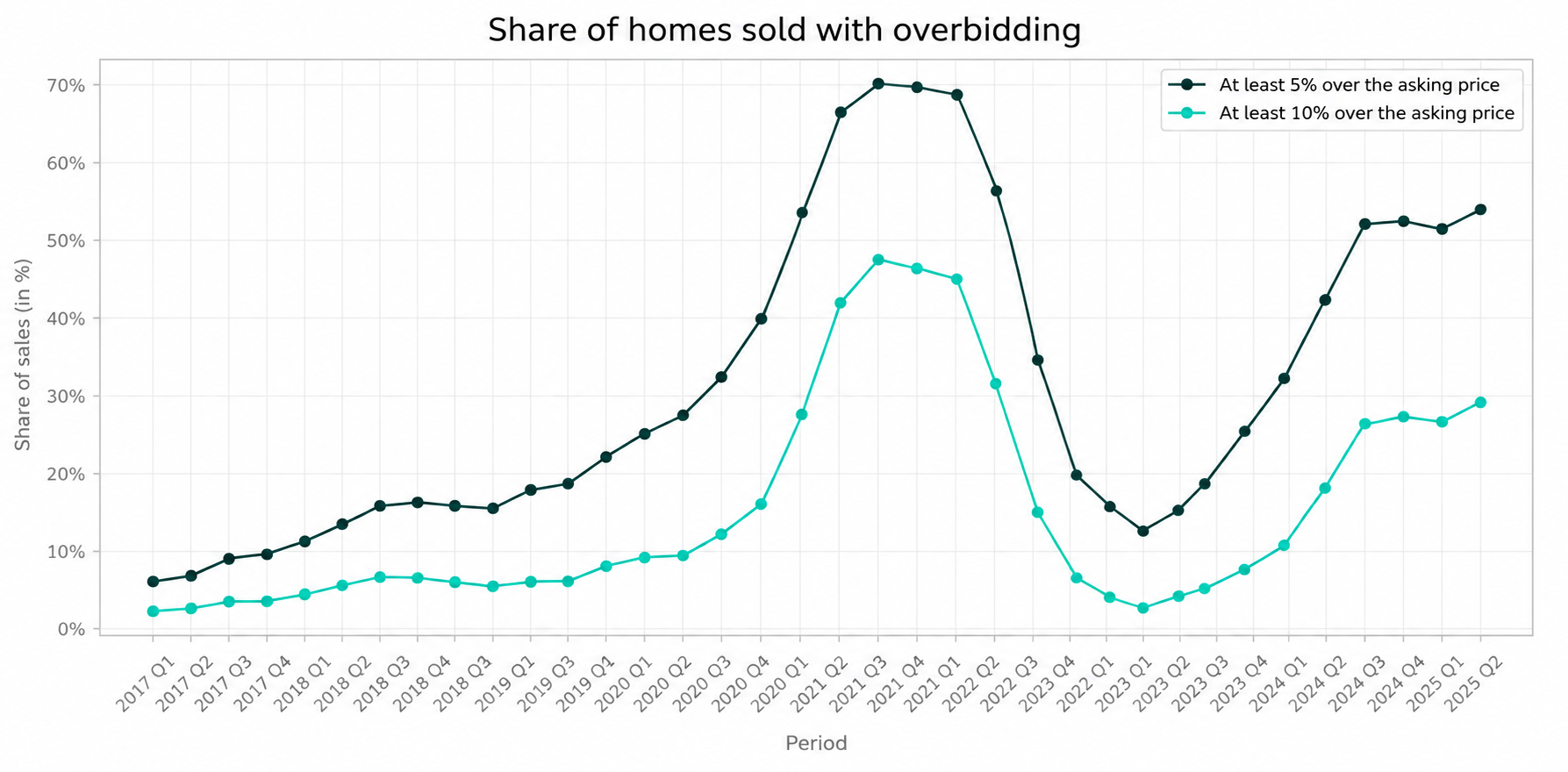
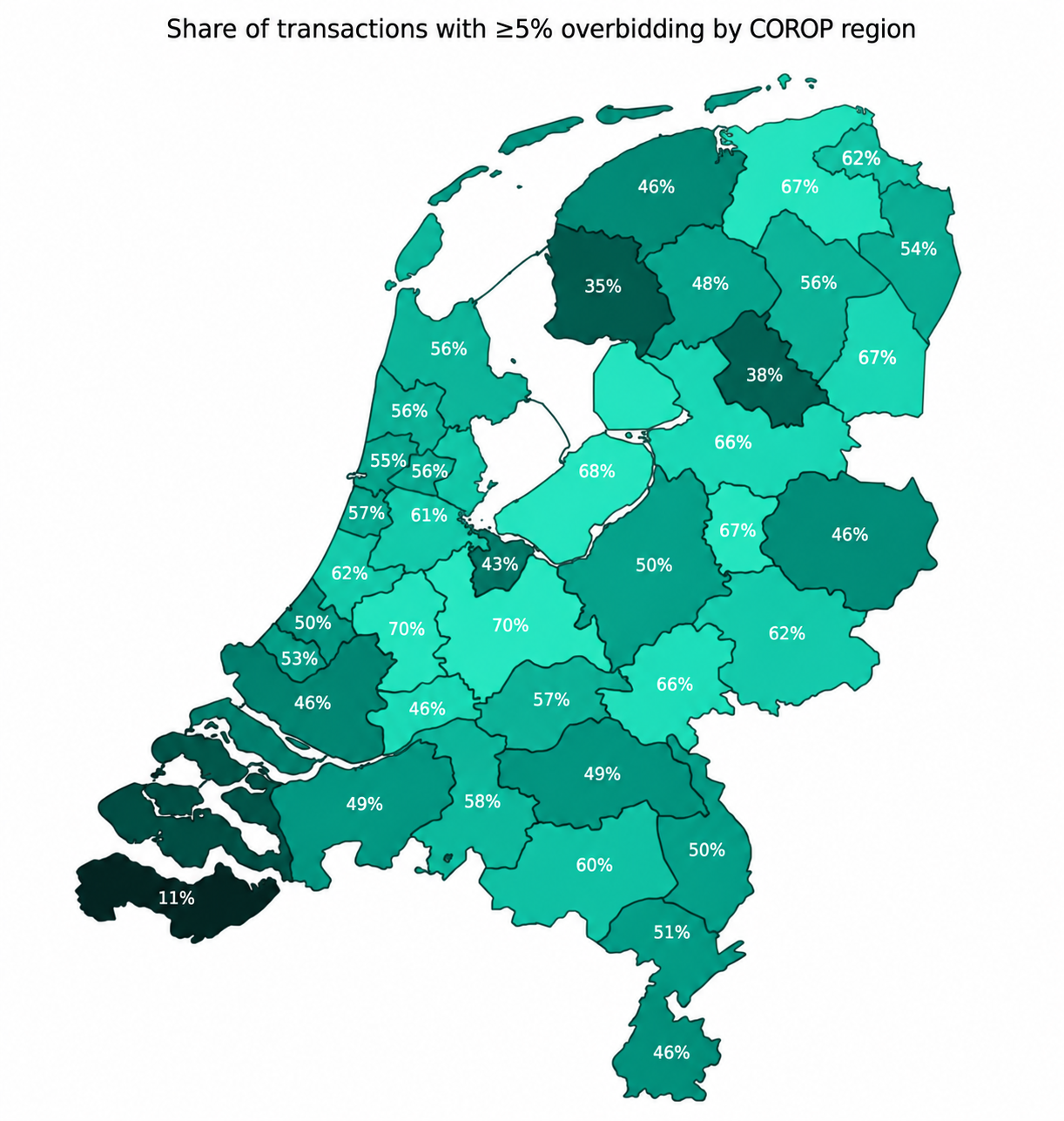
The number of homes receiving bids above the asking price is also steadily increasing. In the second quarter of 2025, more than 50% of home transactions involved bids above the asking price. This upward trend is continuing, although levels have not yet reached the peak seen in 2021. At the height of the market in 2021, almost 70% of homes sold for at least 5% above the asking price.
Regional differences are fading: overbidding is now the norm beyond highly urbanised areas
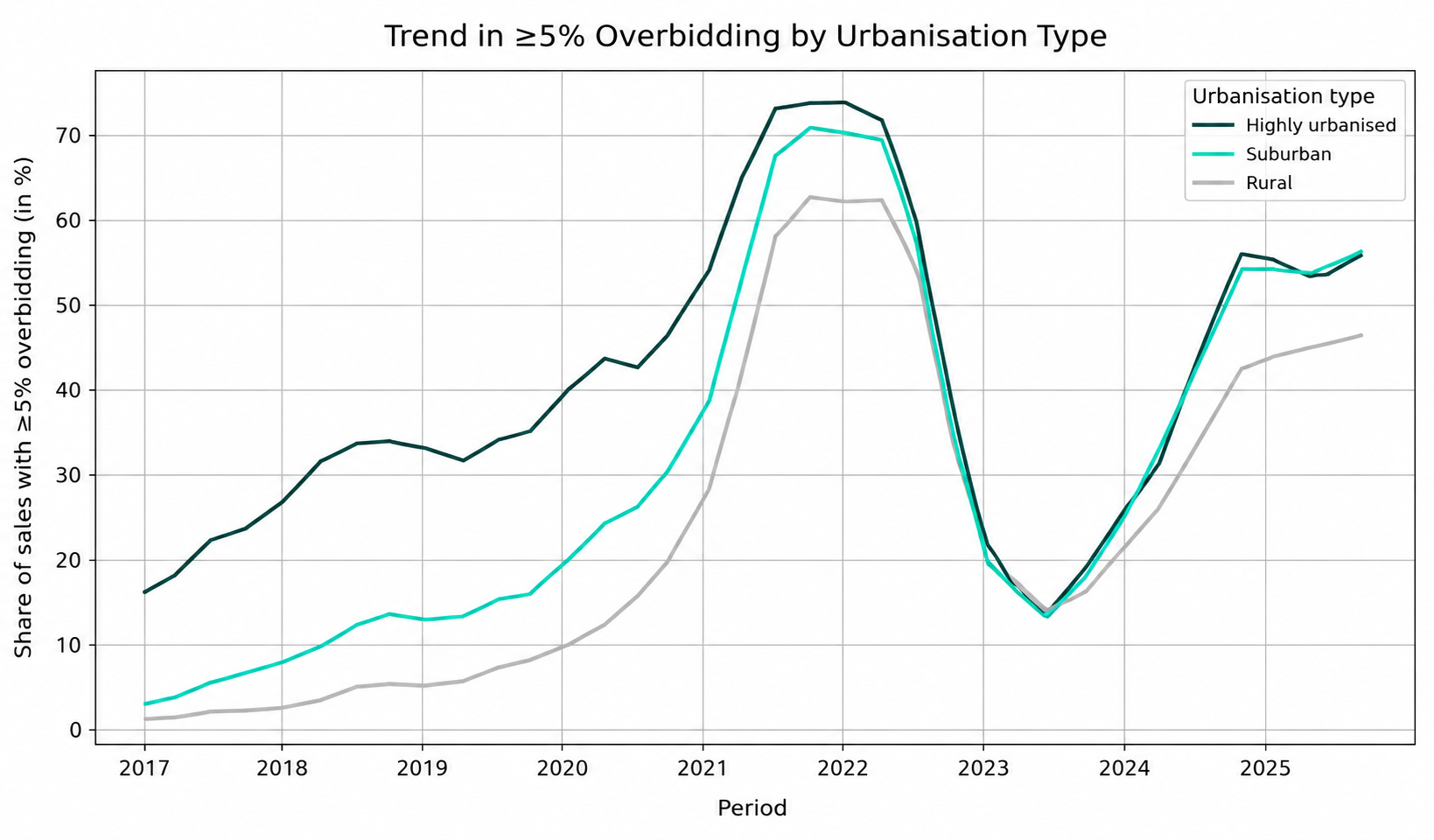
One of the most striking findings from the latest quarterly data is that the difference in overbidding behaviour between highly urbanised areas and suburban regions has almost disappeared. While overbidding was previously primarily associated with cities such as Amsterdam, bidding above the asking price has now become the rule rather than the exception in surrounding residential areas, medium-sized cities and commuter regions as well.
In rural areas, such as smaller villages and the countryside, the proportion of homes subject to overbidding remains somewhat lower, although pressure on the housing market is becoming increasingly noticeable there too.
Significant overbidding is now occurring in almost every region of the Netherlands. Across much of the country, around 50% or more of homes are sold for at least 5% above the asking price. Substantial overbidding is particularly common in the province of Utrecht and eastern South Holland. The notable exception is Zeeuws-Vlaanderen, where only 11% of homes are sold for at least 5% above the asking price.
Sales volumes remain stable at a high level
Rising prices do not appear to be slowing the number of home sales. In the second quarter of 2025, 58,231 homes changed hands. This is slightly more than in the previous quarter and well above the level recorded at the beginning of 2023.
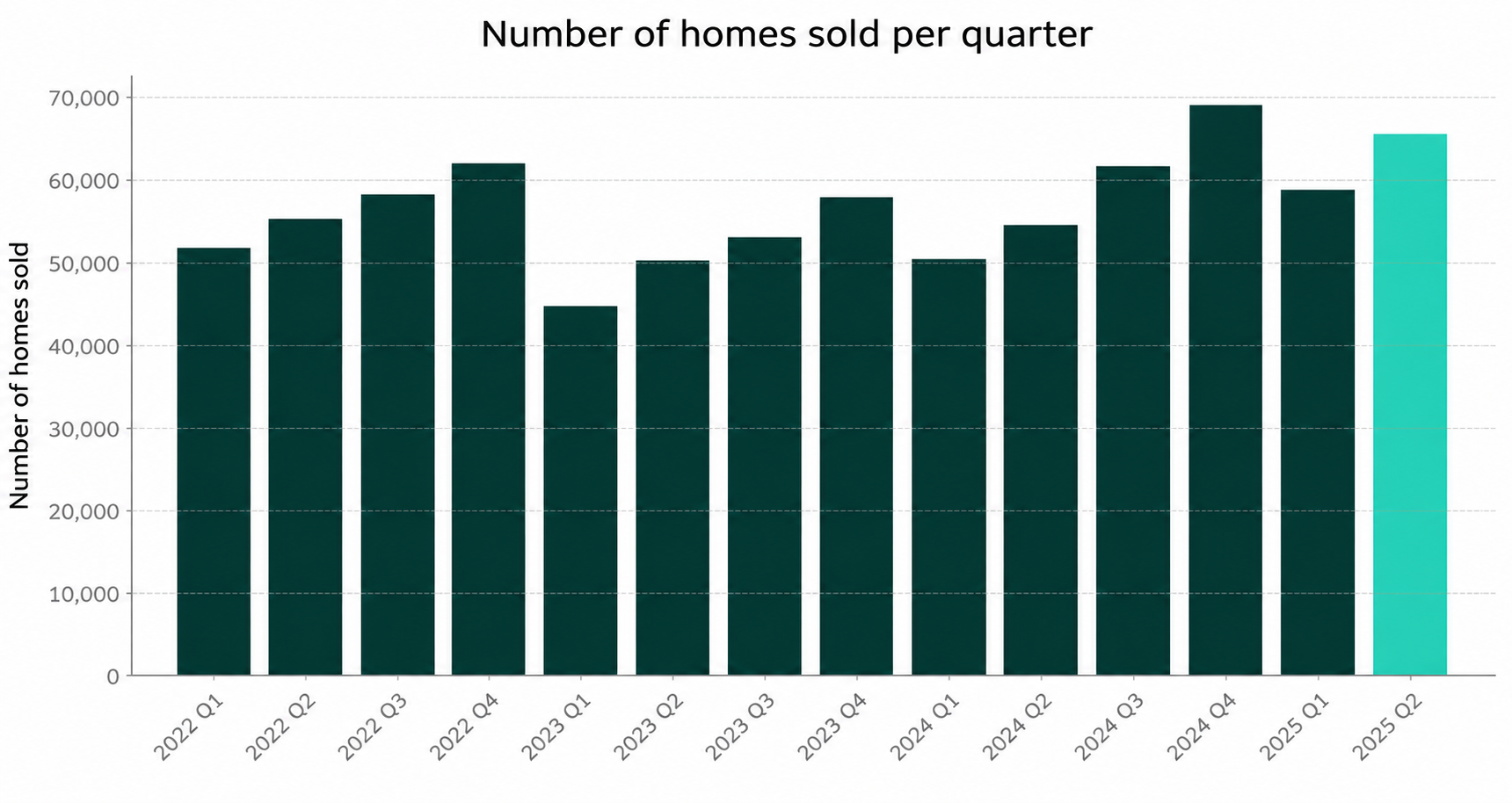
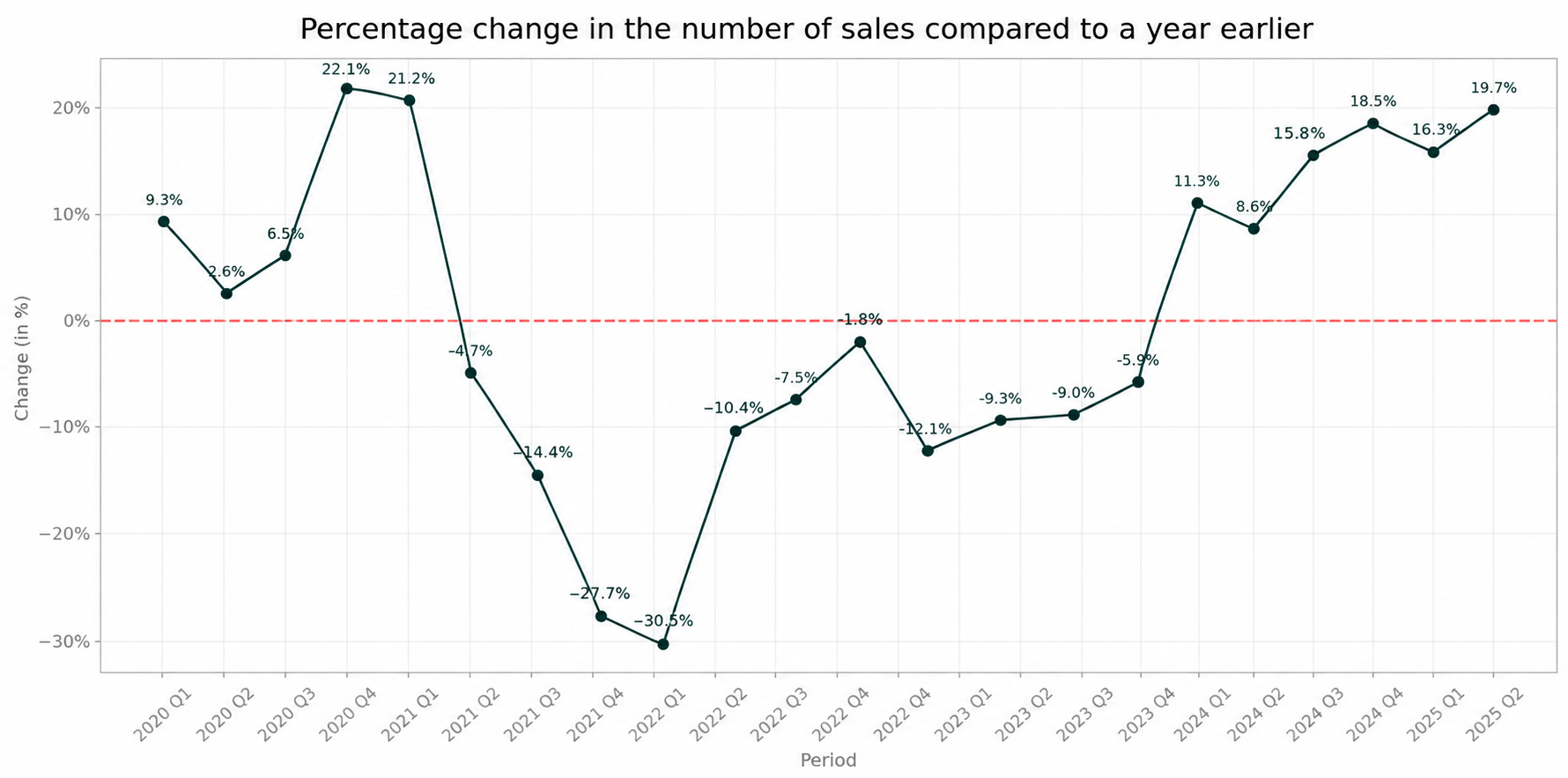
Compared with Q2 2024, the number of sales is almost 20% higher, representing a clear increase. Year-on-year percentage growth is strongest in urban regions.
“Prices are rising, but they remain below the levels seen in 2021 and the first half of 2022. What does stand out is the increase in the number of sales. During the previous peak, we saw substantial overbidding despite fewer transactions. Now, we are seeing both greater supply and continued strong overbidding. Whether this increased supply will cause prices to stabilise, or merely provide temporary relief before prices begin rising again towards a new peak, will become clear in the coming months.”
— Erno Alberts, Real Estate Data Expert at Matrixian
Outlook: timing remains crucial for both buyers and sellers
With the summer season in full swing, the housing market traditionally reaches a peak in both demand and sales prices. Historical housing data shows that June and July are consistently the months in which homes achieve the highest sales prices and shortest time on the market.
During this period, sellers benefit from accumulated price increases as well as a more active pool of prospective buyers.